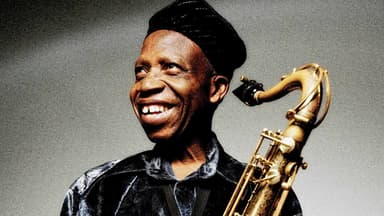
Orlando Julius
Orlando "OJ" Julius Aremu Olusanya Ekemode (1943–2022) was a pioneering Nigerian saxophonist, singer, and bandleader who pioneered Afrobeat and Afro-Soul in the 1960s by fusing traditional highlife with American soul, funk, and jazz. Known for hits like "Super Afro Soul" (1966), he influenced the genre by creating rhythmic, horn-heavy grooves before Fela Kuti. Pioneering Afro-Fusion: Early in his career, he bridged West African highlife with American pop, soul, and R&B, creating an "Afro-soul" sound that became the foundation for Afrobeat. Julius influenced Fela Kuti, who would attend Modern Aces performances in the 1960s and, according to Julius, learned to play the saxophone from him. Orlando's musical approach mirrored that of contemporary pioneers including Ebo Taylor and Gyedu Blay Ambolley in nearby Ghana and Geraldo Pino from Sierra Leone. All of these performers helped redefine West African pop by taking what was hippest in the immensely popular African-American and Afro-Caribbean records being listened to across the region, and translating it for a local context. Like his counterparts, Orlando imbued his music with local meaning by using indigenous languages, rhythms and melodies while simultaneously creating a sense of cosmopolitan cool and diasporic connection by employing modern instruments, funky styles and English lyrics. In 1963, a young Fela Kuti, who had recently returned to Nigeria from music school in London, spent valuable time watching and sitting in with Orlando Julius and His Modern Aces at the Independence Hotel in Ibadan, before borrowing styles and musicians to form his first group, Koola Lobitos. In the mid '60s, Orlando and his band toured in Europe and the U.S. In response to these experiences, and in order to keep up with the increasing competition from other local bands (including the increasingly popular Fela), this period saw Orlando's groove deepen and expand. With his signature Style, he popularized the use of call-and-response vocals, intricate, layered syncopation, and a soulful saxophone style. His 1960s and 70s tracks, including "Super Afro Soul" and "James Brown Ride On," defined the early sound of Nigerian pop. From '69 to '73, OJ and his new band, the Afro Sounders, recorded frequently at Ginger Baker's ARC studios in Lagos. He was one of the first Nigerian musicians to blend American R&B and soul with highlife music. He co-composed the hit song "Going Back To My Roots" (popularized by Richie Havens) with American producer Lamont Dozier. Julius spent significant time in the United States, particularly in Los Angeles and Oakland in the 1970s, where he formed the band Ashiko and attended film school. He collaborated with international musicians and recorded with London-based group The Heliocentrics, releasing the acclaimed album Jaiyede Afro (2014). Orlando Julius continued performing and recording, collaborating with artists such as Hugh Masekela, until his death in 2022. Julius Ekemode's legacy lays claim to first Afrobeat or "Afro-Soul" album, "Jaguar Nana" which was released in 1965 while Fela's first Afrobeat album was released in early 1970s. While there is a credence to his (Orlando Julius Ekemode's) claim, both Orlando Julius and Fela experimented with Highlife, Jazz, Soul and various traditional African music to form what is currently known as "Afrobeat."